Investigation of resilience mechanisms in south Florida coral reef ecosystems
Mentors:
Dr. Ashley Rossin and Dr. Michael Studivan
Dr. Ashley Rossin is a postdoctoral researcher in the AOML Coral Program studying reproduction in urban corals in southeast Florida. Her research has focused on coral disease and reproduction in the western Atlantic. She understands the importance of hands-on research opportunities and collaborations in the development of students in early career stages.
Dr. Michael Studivan's research involves the use of advanced molecular techniques to better understand coral physiology and adaptation, as well as genetic connectivity of coral ecosystems in marginal environments. He aims to identify molecular mechanisms at the individual level that may affect population-wide ecosystem processes in variable environments, particularly in light of recent coral disease outbreaks on the Florida Reef Tract and wider Caribbean. He completed his graduate degrees and postdoctoral fellowship at Florida Atlantic University’s Harbor Branch Oceanographic Institute.
Format:
Hybrid
Brief description:
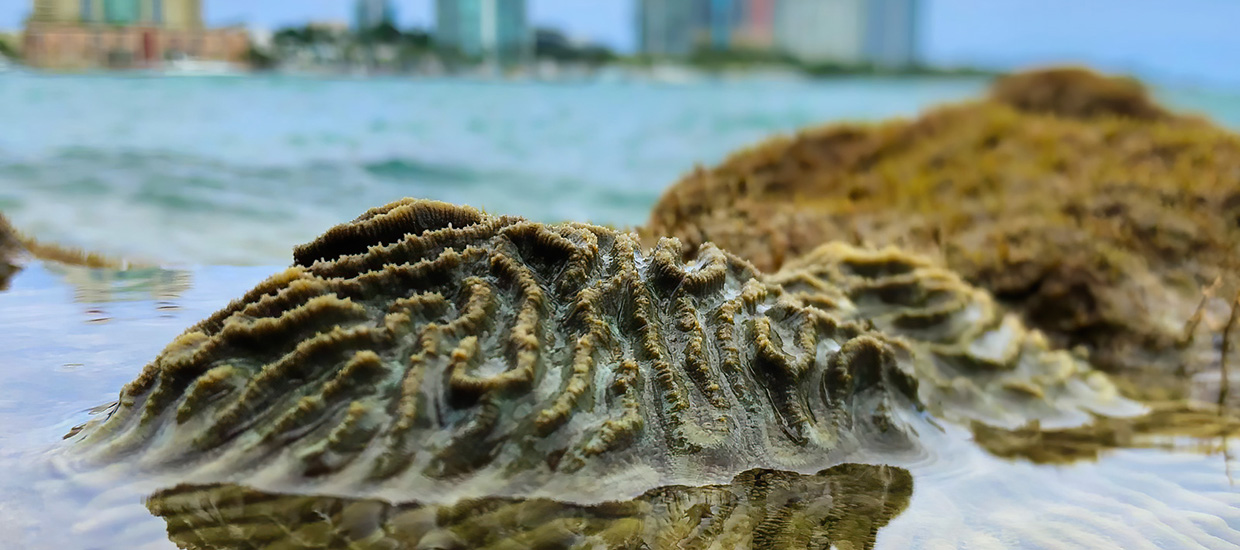
Despite increasing urbanization and highly stressful environmental conditions, the Port of Miami is surprisingly home to multiple species of reef-building corals. The CIMAS/AOML Coral Program has been monitoring unique populations of “urban corals”, investigating their environments, community structure, resilience mechanisms, symbioses, genetics, and reproduction. Currently, we are examining the genetic makeup of these corals and their contributions to population persistence through reproduction. We are also evaluating their potential roles in restoration efforts through partnerships with local restoration practitioners.
The student will be conducting field and lab work on corals in southeastern Florida, potentially including sexual/asexual reproduction, coral husbandry, image analysis, and ‘omics. They will learn various cutting-edge lab techniques and have numerous opportunities to be in the field. The student will work collaboratively with a diverse group of PIs, postdocs, technicians, and students.
The student should have a general understanding of coral reef ecosystems, experience with or willingness to learn coral aquaculture and/or husbandry, willingness to participate in lab and/or fieldwork (particularly snorkeling), willingness to learn any applicable skills that may be required for the project, and the ability to work collaboratively as well as independently.